County officials urge McCormick to help secure Route 228 funding
Butler County officials made the claim economic activity along the Route 228 corridor has reached roughly $30 billion in yearly gross domestic product fueled by recent growth in jobs and population connecting to much of the country.
This, and the need for updated infrastructure to accommodate such economic activity, are among the reasons county leaders and local officials are pushing for U.S. Sen. Dave McCormick, R-Pa., to help secure $51 million in federal funding for the Mars Railroad Bridge West portion of Route 228, the final 3.2-mile segment of the Gateway 228 project.
“There’s 3.2 miles right in the middle of this incredible development that will open up what’s already a remarkable growth story. We’ve got all sort of investments, all sorts of jobs here,” McCormick said Monday, July 6. “This is so exciting, what’s happening in Butler. This project is going to add to the incredible momentum here.”
The need to upgrade the road has existed for years, county commissioners said. Commissioner Kim Geyer said she has talked about it with others since the ’90s, when she was a Mars Area School District board member.
In June, the county and PennDOT jointly submitted a grant request through the United States Department of Transportation’s INFRA program, which awards competitive grants for multimodal freight and highway projects “of national or regional significance.”
The INFRA grant request submitted by Butler County asks for just under $51 million to finish the final 3.2-mile segment of the project.
On Monday, a Butler Transit Authority bus with U.S. Rep. Mike Kelly, R-16th, Butler County commissioners and other officials drove McCormick down Route 228 to show him how federal funding could shape infrastructure serving the economic corridor.
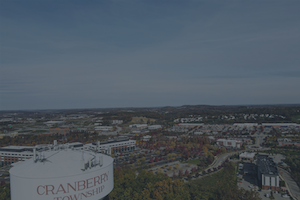
Starting in Cranberry Township and driving him to Harbison Road in Middlesex Township and back, McCormick saw where new housing and businesses have popped up in Seven Fields and Adams Township. Officials noted the number of public and private school buildings on or near the corridor, as well as the proximity to companies like Westinghouse and Coherent.
He also saw the existing two-lane portion of the road and bottlenecks where traffic slows down.
“This used to be all farms?” McCormick asked while riding down the road.
County officials highlighted figures in an effort to communicate the importance of the highway as a “critical economic corridor” and the need to upgrade it. The project encompasses 12,500 businesses, and 40,000 jobs being connected.
“As one of Pennsylvania’s fastest-growing corridors, its ability to accommodate expanding freight, workforce commuting and business development is critical. Butler County is seeking U.S. DOT funding to unlock billions in economic activity, enhance safety reliability and ensure Butler County remains a hub for manufacturing, logistics and commerce,” a fact sheet from county officials read. “Without continued funding, Route 228 will face crippling congestion, bottlenecking critical supply chains and slowing regional economic momentum.”
County officials also said the completed project will lead to a significant decrease in serious accidents and a reduction in peak hour traffic delays.
Construction on the Mars Railroad Bridge West would begin in December 2027, with estimated completion in 2030.
McCormick spoke positively of the project and indicated he would speak to Transportation Secretary Sean Duffy about getting the federal funds approved.
“It was critically important to have him here today. He’s the one who will make the call to Secretary Duffy to push this project over the finish line,” Commissioner Leslie Osche said. “He said he really appreciated the opportunity to actually see it, to see the growth and development that is happening along this corridor and why it is so critical.”
This is not the first time the road project has received federal support. In 2018 and 2020, the county received two separate BUILD grants that supplied a combined $45 million for past phases of the Gateway 228 project.
“You don’t want to lose those investments that you make, because the longer it goes, then it starts to wear and you have to replace road. So you really want to see it all completed in as short of a time frame as possible,” Osche said.