While southwest grows, small towns like Zelie, Evans City face changes
On the Zelienople Harmony Area Community Forum Facebook page, you’ll see occasional posts of legacy businesses past and present. A recent post highlighted the town’s businesses 21 years ago, including The Strand Theater, Nino’s Pizza & Pasta, The Kaufman House and Beechers’ coffee shop.
While the Strand still stands and the Kaufman House is now the Kaufman Tavern, other businesses are no longer there. Now, Main Street also features newer businesses like Papa Joe’s Wine Cellar and Pappy’s Family BBQ.
Like other main streets in southwestern Butler County, the makeup of Zelienople’s business scene has changed during a period where population trends and demographic changes — some upward and some downward — have impacted communities.
It’s not just the businesses, longtime Zelienople Mayor Thomas Oliverio said. As the area undergoes a change in demographics, Zelie is also a younger town than it once was.
“Main Street has changed a lot,” Oliverio said. “Back in the ‘60s, Main Street was much more blue collar. You had the paint shop, barbershops. A lot of changes have been made.
“Today, there’s a lot of business going on,” Oliverio added. “They’re locally owned, even if the owners may have lived outside of Zelienople. It’s changed quite a bit.”
In the L-shaped portion of Butler County where most population growth is happening, suburban and exurban communities along stretches of Interstate 79 and Route 228 are seeing a demographic change that makes Butler one of the only growing counties in Western Pennsylvania.
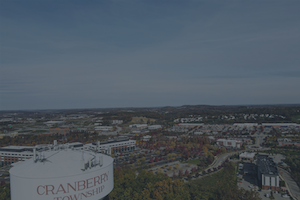
Pittsburgh suburbs, such as Cranberry Township, have become known for their booming business and new development. Further along I-79 and Route 228, Lancaster, Jackson and Middlesex townships have seen significant growth in the past five years, the most recent data from the U.S. Census Bureau shows.
That’s why at Seneca Valley School District, which serves Zelienople and other area municipalities, officials have cited planned housing construction and projected population growth when advocating for an intermediate high school project with a potential price tag of $165 million.
The project, which broke ground in March, is expected to be completed in four to five years.
From 2021 to late 2025, district municipalities had approved 6,000 new housing units, while communities like Jackson Township have planned for even more to come.
Municipalities that have grown more than 5% in population from 2020-25 include townships with new housing developments, such as Adams Township, 7.3%; Cranberry Township, 6.6%; Connoquenessing Borough, 19.9%; Forward Township, 8.2%; Jackson Township, 34.7%; Lancaster Township, 36.1%; Middlesex Township, 10%; and Valencia, 25%.
But within the growing townships, small dots of communities across the southwestern corner of Butler County paint a different picture.
As suburban areas add people to their communities, smaller townships and boroughs tucked in the same area haven’t necessarily seen the same type of growth. Small towns like Evans City, Mars and Callery are not seeing growth in housing like Adams or Jackson townships.
“Everybody thinks the new developments are going in around us when they’re actually going up in Forward Township,” Evans City Mayor Dean Zinkhann said. “We have people move in and out of rentals, things that are not permanent.”
Census data shows between 2020 and 2025, Evans City lost only 77 people, seeing its population hover at about 1,700. Mars’ population has sat at about 1,400 people. Callery’s is at 335, roughly unchanged over the past five years.
A number of dynamics are at play when approaching population changes in a community, Zinkhann said. While some places embrace population growth, others don’t — residents may not want to see sudden change in the tight-knit community they’ve lived in their whole life.
Another factor is geography. Not every municipality has the best geographic landscape to support population growth, Zinkhann also pointed out.
“Geographically, with the hillsides, we’re not great for growth,” Zinkhann said. “Honestly, I like our small, niche community.
“I’m sort of glad we don’t have that kind of growth, to be honest with you.”
From 2000 to 2010, Zelienople lost over 300 residents.
But from 2010 to 2020, it regained 100.
“We’ve been very fortunate. The businesses are doing well,” Oliverio said. “Many boroughs across Pennsylvania, they’re shrinking and businesses are closing and there’s nothing there. Zelie seems to be doing really well.”
While some may not like change that comes with population shifts, Oliverio said he sees people in his community that enjoy what the newer version of Zelienople has to offer.
“I’m an old-timer. I’ve been sitting on council for close to 50 years and a lot of younger people on council, they seem to kind of enjoy it. I think they like the changes and so forth,” Oliverio said. “You have a younger generation. A few of us old-timers are still around, but people like this kind of change. We have the businesses and the open air market on Main Street.”