Shifts highlight changing economy, workforce, population makeup
Follow the highways. That’s where you’ll see Butler County’s population growth.
While communities along stretches such as Interstate 79 and Route 228 are seeing an uptick in new residents — a push that makes Butler one of the only growing counties in Western Pennsylvania — communities without major highways nearby are shrinking.
“I think when you look at the numbers statewide, the southwest Pa. region in particular, I think it’s a good assessment that we’re very healthy, that we continue to see growth, particularly along southern corridor east to west,” county Commissioner Leslie Osche said.
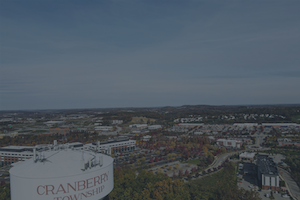
The Pittsburgh suburbs, such as Cranberry Township, have become known for their booming business and new development. Further along I-79 and Route 228, Lancaster, Jackson and Middlesex townships have seen significant growth in the past five years, the most recent data from the U.S. Census Bureau shows.
In the eastern portion of Butler County, rural communities like Saxonburg, Petrolia and Bruin have seen population decreasing slightly since 2020. To the west, both Slippery Rock borough and township, along with Franklin Township, present themselves as growing outliers from the decreasing and stagnant population patterns surrounding them. The City of Butler, the county seat, decreased in population.
As the nation celebrates its 250th anniversary this month, Butler County sits with a population of roughly 201,000 residents — a figure double that of the 1950s.
It has slowly but steadily added about 10,000 residents per decade since 2000 while maintaining steady economic growth.
“The good news is that in the economic development world in Butler, we’re doing well. We’re holding our own,” county Commissioner Kevin Boozel said. “I like how our community has been able to manage growth, because otherwise it turns into a boom-bust.
“And I think the employers do a good job of that. They don’t over-hire at one time, hoping they can sustain it. They hire enough and everyone’s working really hard.”
While 18 other counties statewide are more populous, Butler is the only county in Western Pennsylvania that has shown consistent, meaningful growth in recent years. At a 3.3% population increase rate from 2020 to 2025, it has added roughly 6,500 residents over the past five years.
Statewide, Pennsylvania’s population has only grown about 0.4% in the 2020s. Most of its growth was centered around the suburbs and exurbs of Philadelphia.
The county’s growth patterns have also reshaped the makeup of its population. Most now live in what the Census Bureau defines as “urban areas.”
By 2020, Butler County’s population consisted of over three times as many Hispanic or Latino individuals as it did in 2000 and boasted almost three times more people of Asian descent. According to the data, over six times as many Butler County residents are classified as “mixed race or multiracial” compared with 2000.
The recent growth, and hypothetical future growth, have often been cited as reasons for investing in improved infrastructure, recreation, emergency services and expanded or brand new school buildings. An increased tax base can provide more tax revenue for such projects.
“I wouldn’t discount our parks,” Osche said. “We’re also fortunate to have two strong (higher) educational institutions. Taking advantage of that aspect is critical for growing.”
Demographers hired by school districts have projected population increases that require bigger, modernized facilities.
At Seneca Valley School District, officials often cited planned housing construction when advocating for approving an about $118 million intermediate high school project. From 2021 to late 2025, district municipalities had approved 6,000 new housing units, while communities like Jackson Township have planned for even more to come.
At Mars Area School District, board members previously conducted a demographic study to estimate population growth in coming years. It showed consistent enrollment growth at each grade level, peaking around 2030. The district is addressing those trends by spending close to $22 million on an elementary expansion project that includes a new three-story classroom wing. It has also considered more projects, such as renovating the centennial school.
With the spike in population and community spending, job statistics have stayed healthy overall. Currently, the unemployment rate in Butler County is around 3.2%, according to the U.S. Bureau for Labor Statistics, compared with 4.2% nationally.
But the overall numbers represent a single county where communities’ trends are diverging.
The growing side of the county features the signs of growth one may imagine: 6-8 lane roads, new housing built with freshly paved roads and sidewalks, newly renovated school buildings and businesses popping up.
Data from the Census Bureau, presented by the University of Pittsburgh Center for Social and Urban Research, highlights population growth estimates in Butler County are almost entirely concentrated in the suburban, southwest corner of the county, within proximity of the two major corridors.
The county above Route 422 in mid-2026 looks notably different from the county below the road that cuts through Muddy Creek, Franklin, Butler, Summit and Clearfield townships.
But as growth follows I-79 northbound into Jackson and Lancaster townships and even toward Slippery Rock township and borough, that picture may be changing.
Likewise, previously rural communities along Route 228, such as Buffalo and Middlesex townships, have come to grapple with growth.
Some communities along the route have boomed, while others have merely increased steadily.
Only the boroughs without much physical space to allow growth and Clinton Township are losing population along Route 228.
Municipalities that have grown more than 5% from 2020-25 include: Adams Township (7.3%), Cranberry Township (6.6%), Connoquenessing Borough (19.9%), Forward Township (8.2%), Jackson Township (34.7%), Lancaster Township (36.1%), Middlesex Township (10%) and Valencia (25%).
That population growth makes up part of an area north of Pittsburgh, stretching south into Pine and Marshall townships in Allegheny County, that have seen some of the highest population growth trends in Pennsylvania in past decades. Officials have at times credited Interstate 279 being built in the 1980s as something that contributed to population growth over time.
“I would say things are going well,” said township manager Dan Santoro. “When I say that it’s because Cranberry always focused on comprehensive planning for the community. We look at all that, housing, transportation needs, infrastructure, water, sewer, public safety services.
“Cranberry has been doing that since the ’90s.”
Cranberry is now embarking on a process of updating its long-range plan. This will include workshops and listening sessions with the public on topics like parks and recreation, public safety and transportation.
Elsewhere in the county, the only places with noticeable population growth are Slippery Rock Township (24.7%), Slippery Rock Borough (11.5%) and Buffalo Township (4.1%), all along or near one of the two highways touched by growing communities in the southwest. In these instances, the Slippery Rock area is fed by I-79; while Buffalo Township is close to Route 228 and Route 356.
The growth is similar to other parts of the state that have seen increases in population in recent years. Municipalities in the Harrisburg and Philadelphia regions have seen similar percentages of growth.
“It’s interesting to me, folks think Cranberry is growing rapidly. When they think of Cranberry, they’re also thinking about Jackson to the north, Adams and Middlesex to the east, as well as Marshall and Pine to the south,” Santoro said. “But when you look at the numbers — 1.6% per year for the past 20 years, 400 residents a year — it’s not a blistering pace that people always try to attribute to us.”
While many of these communities show similar growth to those in the eastern half of the state and around Philadelphia, they are outpaced by out-of-state communities. According to the World Population Review, Pennsylvania as a whole has increased about 2.36% since 2020, the eighth least nationally.
Most counties in the Greater Pittsburgh Area have seen their populations creep down, regardless of whether their population is over a million or under 100,000. This includes: Allegheny (-2.04%), Armstrong (-2.86%), Beaver (-1.3%), Fayette (-4.5%), Lawrence (-2.5%) and Westmoreland (-1.49%) counties. Washington County has stayed stagnant with a 0.7% population increase over the past five years, with growth centered around places like Peters Township — similar in character to Cranberry Township.
In this decade, the central, eastern and northern parts of Butler County have seen that same kind of decline in population.
To promote growth in these regions — both population and economic — officials point to the need to continue making investments into things like improved infrastructure and housing. Osche pointed to past projects like the Marion Township sewer project and the A-C Valley business park water and sewer system as examples of promoting an environment that can handle growth.
“What we’ve done is provide tools for them to make infrastructure, so they can improve roads and bridges,” Osche said. “I think the broadband initiative was critical, making sure folks in the north have some access, focusing on those areas to expand broadband. And making sure folks along Interstate 80 can experience some growth there.”
However, while suburban areas continually seem to add people to their communities, smaller townships and boroughs tucked in the same area haven’t necessarily seen the same type of growth. Places like Evans City and Mars are not seeing growth in housing like Adams or Jackson townships.
Between 2020 and 2025, Evans City lost only 77 people, seeing its population hover at about 1,700. Mars’ population has sat at about 1,400 people. Callery’s is at 335 residents after only losing 17 in the past five years.
“Everybody thinks the new developments are going in around us when they’re actually going up in Forward Township,” Evans City Mayor Dean Zinkhann said. “We have people move in and out of rentals, things that are not permanent.”
Not every municipality has the best geographic landscape to support population growth, Zinkhann pointed out.
“Geographically, with the hillsides, we’re not great for growth,” Zinkhann said. “Honestly, I like our small, niche community.
“I wonder, do you want outside people coming in with all that development? We’re an old town with community togetherness. I’m sort of glad we don’t have that growth, to be honest with you.”
For places like these, as well as towns like Butler, keeping businesses open and a lively mood on main streets is just as important as growth, Butler Mayor Bob Dandoy said.
“I can tell you our occupancy on Main Street is higher than it has been since about four or five years ago. There seems to be an interest in Main Street. We’ve lost some businesses, but we’ve had some vibrant ones come in,” Dandoy said.
Dandoy also pointed to the need for affordable housing for groups like young couples and older residents looking to downsize as a missing piece of the puzzle.
“I don’t think that we’ve seen in the city, population growth. Butler County was one of the only ones in southwestern Pennsylvania … that has seen population growth. I don’t know how much that’s impacted us, but we’re hoping that we start to see that in our city,” Dandoy said.
A place like Cranberry Township doesn’t only have more people — it has more cars.
More people means more cars, more need for jobs and more demand for retail.
“With traffic and growth, think of Cranberry. It’s a result of people here for other reasons,” Santoro said. “There’s 25,000 jobs in Cranberry. People are commuting in and out day to day.”
Butler County has continued to see economic growth in recent years. Local industry and manufacturing is still here — Penn United, Oberg, Cleveland-Cliffs, Westinghouse and others are still here. National and regional brands like Giant Eagle, now acquired by Kroger, and Independence Health System, to be acquired by West Virginia University Health System, have built their presence, as well as local school districts and government employers.
However, according to the Federal Reserve, the civilian labor force in Butler County has only increased by just over 5,000 since 2010.
According to county statistics, the biggest industry in the county is healthcare and social assistance, which employs 14,846 Butler County residents.
Mark Gordon, chairman of the Butler County Planning Commission, previously told the Eagle a major factor in Butler County’s strong employment rate and economy is in fact its proximity to major highways. Those highways make reaching markets and large portions of the country’s population easy for businesses.